Fuze: Partner strategy
Scale in the enterprise ucaas marketProduct Vision: To scale Fuze in the enterprise market, we need to extend and enhance our product and systems to enable global full-resale, and build the tooling for resellers to completely enable and manage the lifecycle of their customers. Ultimately, we want to provide partners a variety of integration models, both technical and contractual.
Execution: Many of the workflows required for provisioning and maintenance of customers did not have self-serve tooling, and required internal Fuze participation. We needed to identify and prioritize the most painful gaps in our process to create a roadmap that would satisfy the needs of resellers, so we ould realize the mutual value of our partner program.
Journey mapping
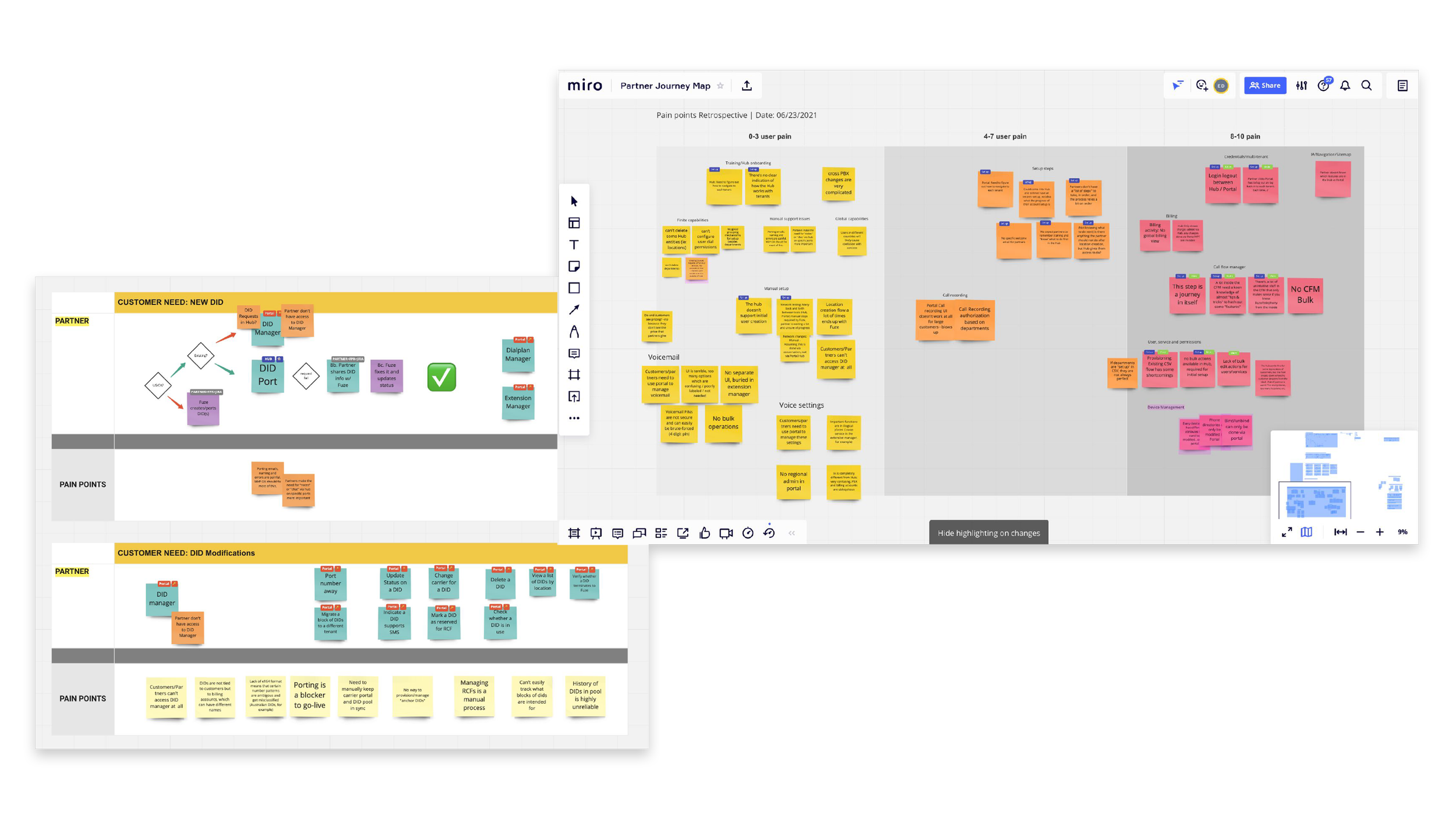
The Fuze team got together to map what we knew of the partner and internal user journey. We included actual partners and resellers with our stakeholder group and had them talk through the highs and lows of their experiences.
We ranked the user pain based on frequency of the actions, severity of the pain experienced, and based top contenders for the roadmap on real customer feedback. Once the biggest frustration points were identified, product and user experience teams prioritized which problems to solve.
01
Map complicated cross-functional user journey
02
Empathy map pain points, scale based on impact
03
Align on goals + focus, set the roadmap
Onboarding
Demo environments
Contracting and account setup
Provisioning workflows
Initial user creation
Call flow creation
Tenant creation
Hardware ordering
PBX setup
Initial location creation
Network setup/testing
Queue creation
Pricing
Dial plans
The result

Maintenance workflows, even over onboarding.
Keeping the user at the forefront, and advocating for the customer even when it’s less popular.
Many of Fuze’s onboarding flows are painful—for Fuze internal teams. They are costly, but cause less end user pain, and are more seamless from a customer perspective. Customers and users feel the most pain in the repeated, daily actions of maintenance. They want to have full control once they are set up, or they will resell another provider.
Maintenance
Multi-tenant views
Adding/editing users
Adding editing services
Location management
Binding devices
Editing call flows
Phone ordering
Bulk user/location/department actions
Department creation/editing
Device management
Billing and auditing
Voicemail and call recording settings
Number porting/ordering
Initiatives
DID porting
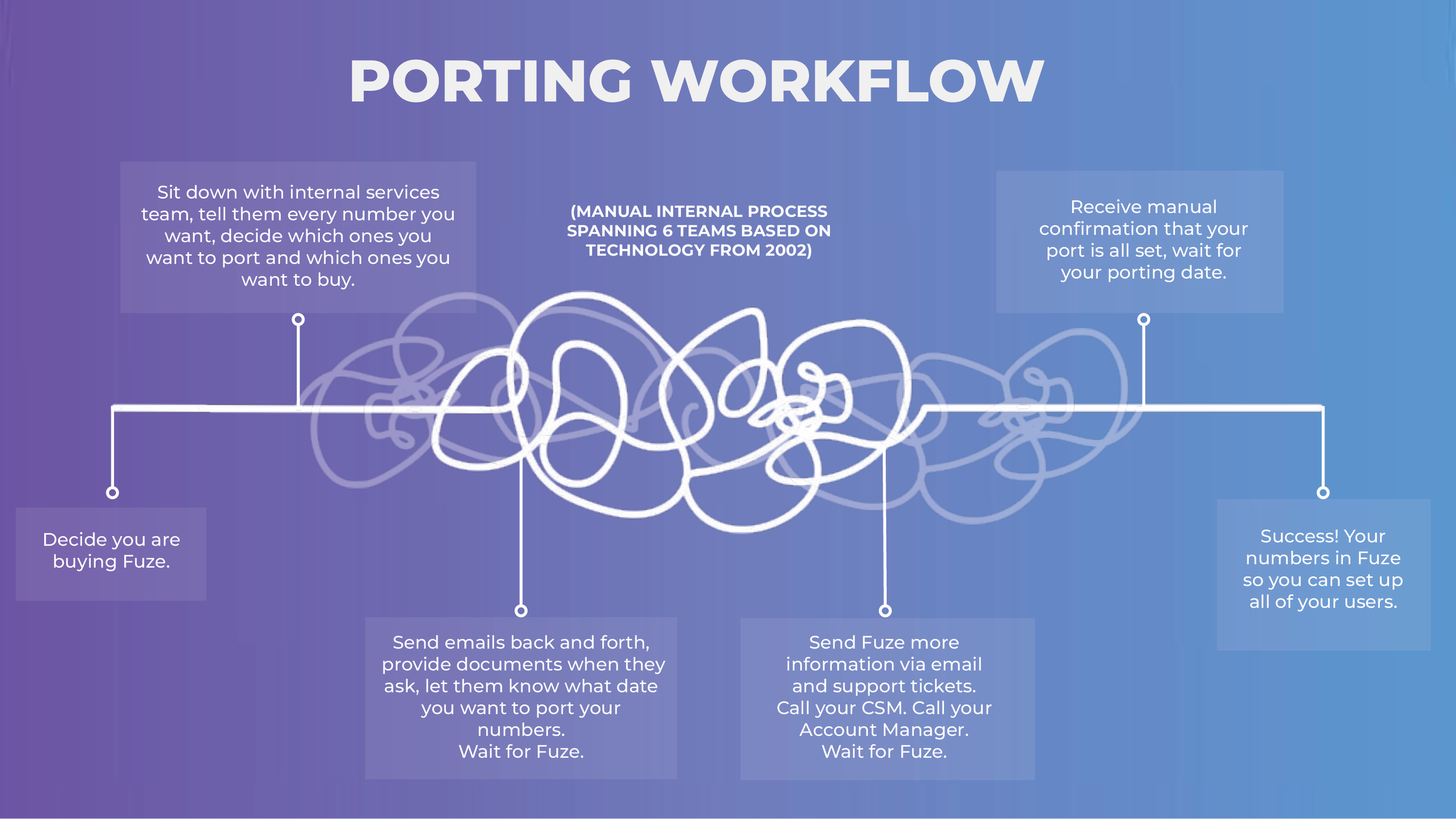
The porting process was a roadblock. It was painful, manual and time-consuming. Partners and customers want to be able to set up their accounts and deploy users without having to wait for Fuze, and resolve errors as quickly as possible.
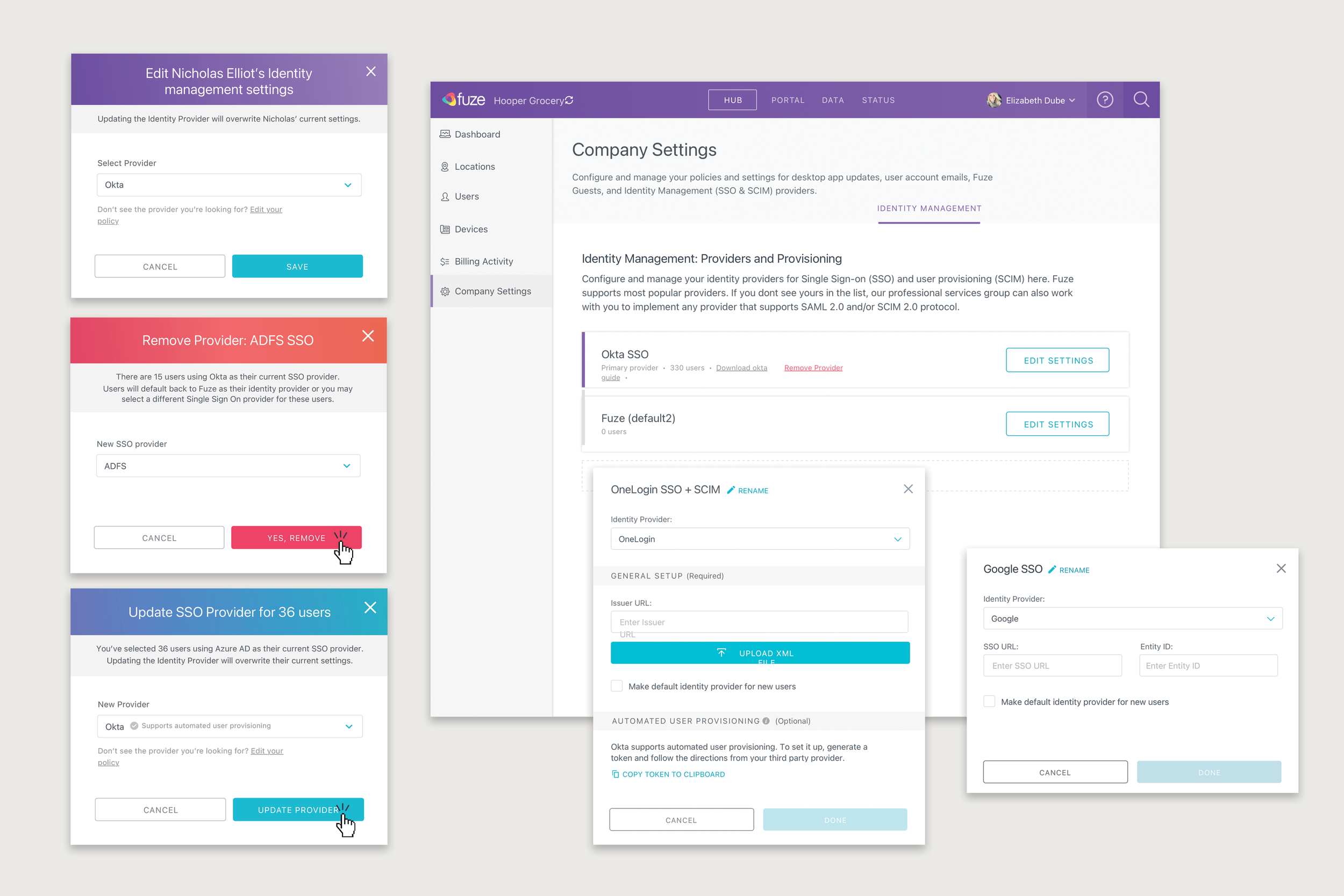
SSO + SCIM configuration
As a frequent customer request in the enterprise space—our customers needed to integrate their SSO solutions for seamless onboarding, offboarding and user management. Giving customers the tooling to automate user base changes meant one less oull on our professional services teams, and more power in our administrators hands.
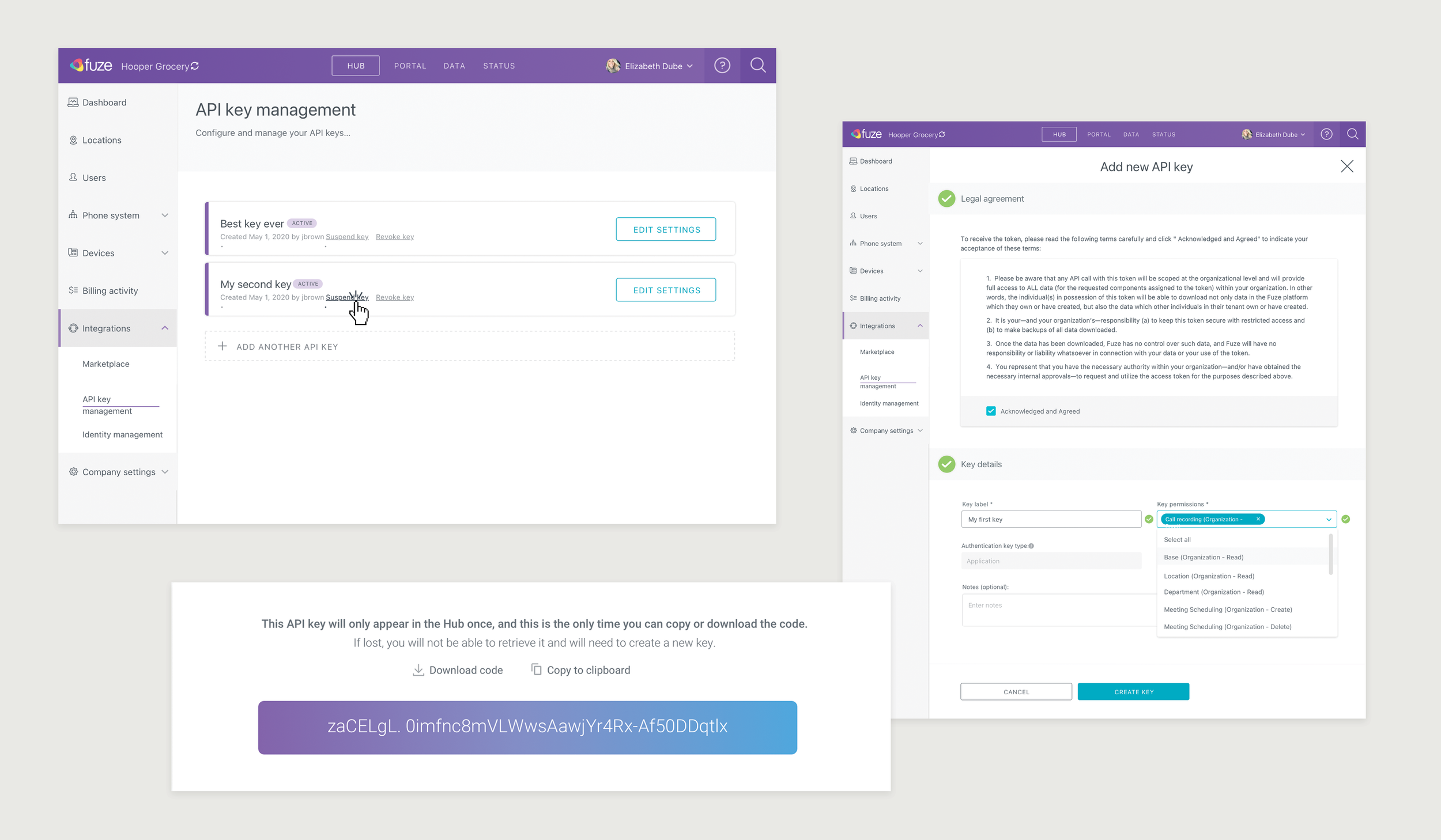
API key management
After building the developer center, we needed a permissions structure outside of our traditional configurations to allow admins to manage access. With the creation of our API Key management feature admins would have full control over permissions for our growing, open source API library.
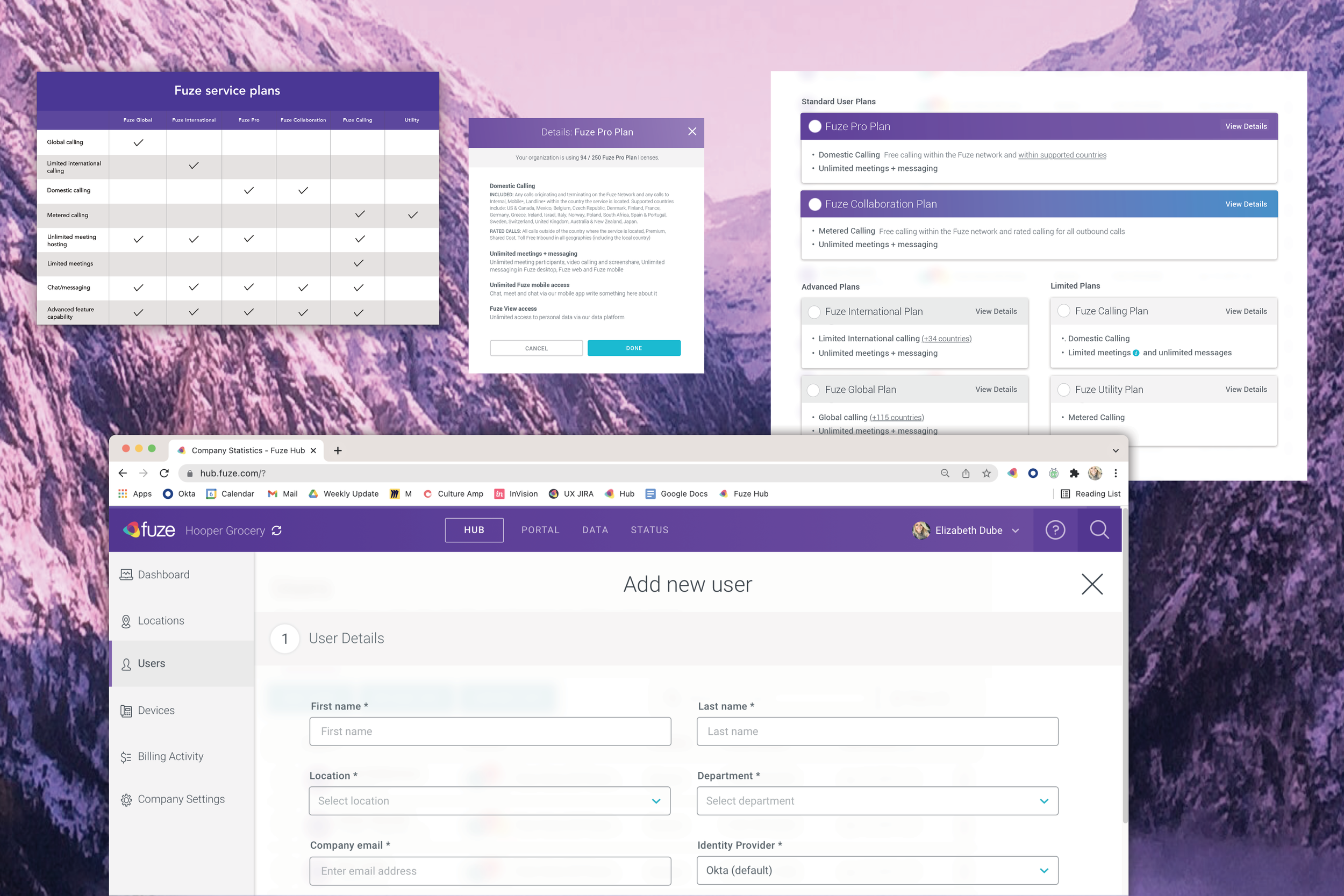
Pricing & packaging
Thousands of SKUs existed in the Fuze Product Catalog for every unique situation for every unique customer. They were not well organized, easily understandable or flexible. This led to incorrect bills, upset customers, and many users with SKUs/Products that didn’t fit their needs. Incorrect product selection was painful for internal teams (complicated selling process, fixing of bills, manual work, credits issued) and externally for customers (support tickets, confusion/frustration, being overcharged).